Need furnace repair in Warren?
Questions about a heating or cooling problem? Send a request through the form or email contact@pickingdrama.beer. A local provider in our network can follow up with next steps.
No obligation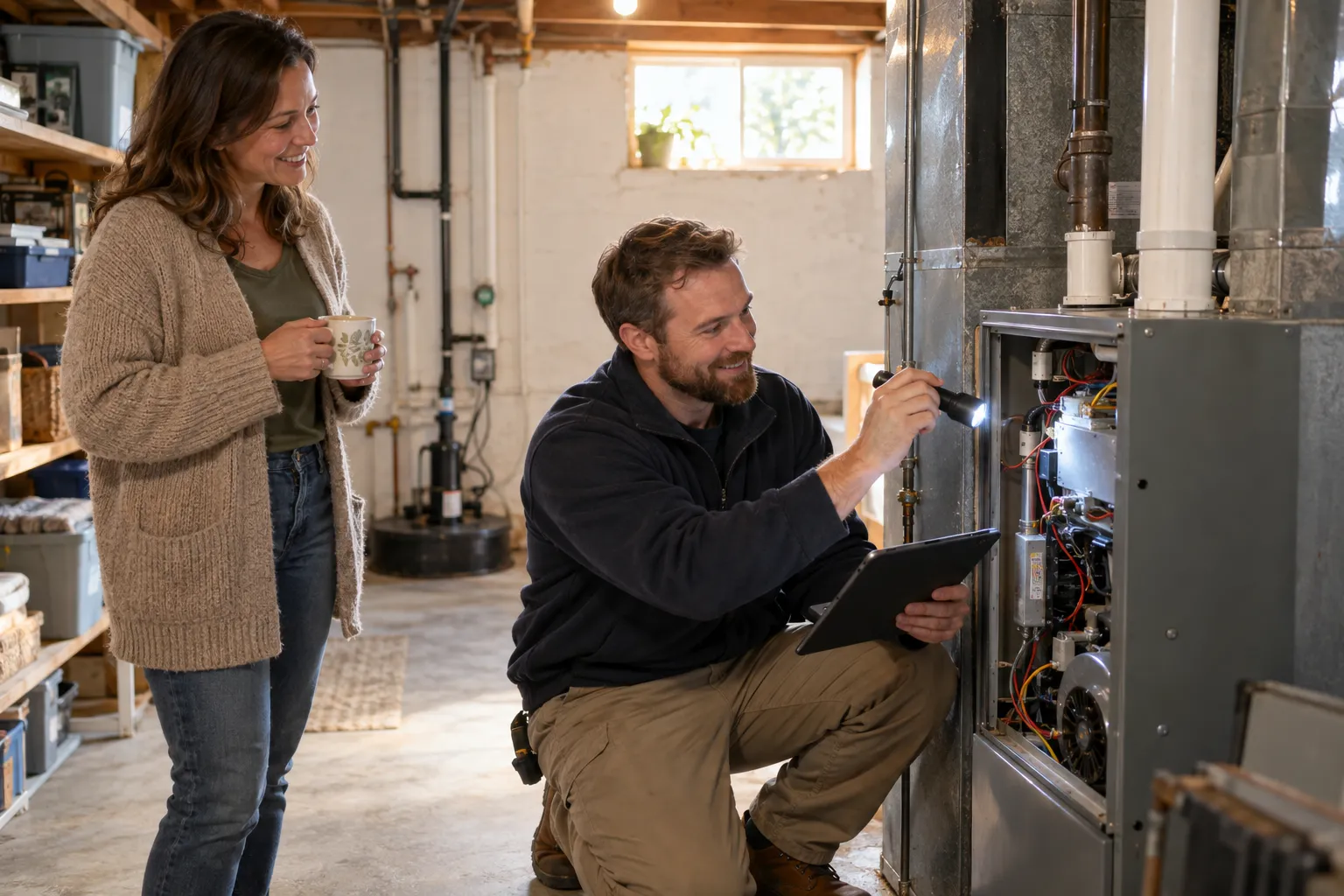
A furnace that stops working in a cold snap feels like a big problem. It is usually a small part, and many repairs are simple. You do not have to figure it out alone.
Pickingdrama Heating & Air is a referral service. We do not repair furnaces ourselves. We connect homeowners in the Warren area with independent heating and cooling providers in our network. They come to your home, find the cause, and explain the repair in plain words. Tell us when your week is busiest, and we will help you plan around school runs, shifts and bedtimes. You can request an estimate with no obligation, and you choose what happens next.
Your safety comes before any repair. Read this part first, even if the house is cold.
A rotten-egg smell can mean a gas leak. Do not flip light switches or use a lighter. Get everyone outside, including pets. Then contact your gas utility or emergency services from outside the home. Wait for the all-clear before going back in.
Carbon monoxide has no smell. Treat the alarm as real. Move outside into fresh air and contact emergency services. Do not turn the furnace back on until a provider has checked it.
If there is no gas smell and no alarm, take a breath. Frame houses and older bungalows lose warmth fast when the frost sets in. Close doors to unused rooms, and put blankets on beds. Keep taps trickling on the coldest nights if your pipes run along outside walls.
Request a callback to check provider availability. Many providers can respond quickly, but hours vary.
These take a few minutes. They are good first steps if you have never dealt with a broken furnace before.
Make sure it is set to heat and the temperature is above the room reading. Dead batteries are a common reason for a silent system.
A clogged filter can make a furnace shut itself off. Most furnaces also have a switch that looks like a light switch near the unit. Make sure nobody bumped it off.
If the breaker has tripped, reset it once. If it trips again, stop. That points to a deeper problem.
In homes with a full basement, check that the area around the furnace is dry and clear. Water near the unit after a spring flood is a reason to hold off and ask a provider.
Some signs are loud. Others are quiet. Here is what to listen and look for.
A yellow flame and strange smells deserve a quick look. Do not wait for those to get worse.
Plain words first. The provider arrives, asks what you noticed, and looks at the thermostat, filter, burners and blower. They test parts, find the cause, and give you a written quote before any work starts. You decide whether to go ahead.
Tell the provider if you work shifts, have little ones napping, or need the house quiet at certain hours. Many repairs take a couple of hours, though bigger jobs take longer. Ask for a window that fits your day.
The igniter lights the burners. The flame sensor checks that they are lit. Both wear out or get dirty, and both are usually modest fixes.
The blower pushes warm air through your vents. If it hums but does not spin, or runs weakly, the motor or a capacitor may need replacing.
The control board is the furnace's brain. A bad board or a faulty thermostat can mimic bigger failures, so a good diagnosis matters.
Most furnaces last roughly 15 to 20 years. If yours is older, repairs keep adding up, or the heat exchanger is cracked, replacement may make more sense. A cracked heat exchanger is a safety issue, so take it seriously.
A simple way to think about it: if a repair costs close to half the price of a new unit, ask the provider about options. If you are searching for furnace replacement near me, a provider can walk you through sizes and types. Heating and cooling parts often share ductwork, so ask whether that needs a look too.
If your air conditioner has also failed, that is a separate visit. Ask about emergency AC repair when the weather turns hot and humid.
Change the filter on schedule. Keep vents clear of toys and furniture. Book a seasonal HVAC service visit in early fall, before the first hard frost. It is easier to schedule when your week is calm.
Request a callback to ask a provider about a seasonal checkup.
Providers look at gas connections, the flame, and venting so the furnace runs safely before they leave.
You get the cause explained in simple words, with the failed part named and shown.
Providers share the price in writing before work starts, so you can decide calmly.
Ask for a visit window that fits school runs, shifts and bedtimes, as provider hours allow.
Prices vary by home, part and provider. These are typical U.S. ranges to help you plan. Always ask for a written quote before work begins, so there are no surprises.
| Repair item | Typical range | Notes |
|---|---|---|
| Diagnostic visit | $75 – $200 | Often applied toward the repair |
| Igniter replacement | $150 – $450 | Common fix for no-heat calls |
| Flame sensor service | $100 – $300 | Cleaning costs less than replacing |
| Blower motor repair | $300 – $900 | Depends on motor type and access |
| Thermostat replacement | $120 – $400 | Smart models cost more |
| Control board replacement | $250 – $800 | Varies by furnace make and age |
Describe the problem and your schedule. Request a callback or use the request form on this page.
We connect you with independent local providers who handle furnace repair in your area.
The provider explains the cause and gives a written quote for you to read.
Pick a visit window that suits your household, and the provider handles the repair.
We explain each step simply, so a first-time homeowner never feels rushed or lost.
Local providers in our network do the work, and you choose who to hire.
Share your schedule and we help you plan visits with less disruption.
Request an estimate and take your time deciding. There is no pressure to book.
Questions about a heating or cooling problem? Send a request through the form or email contact@pickingdrama.beer. A local provider in our network can follow up with next steps.
No obligationCommon causes include a dirty filter, a faulty thermostat, a bad igniter, or a failing blower. Check the filter and thermostat first. If those look fine, a provider can test the other parts safely.
Not if you smell gas or hear a carbon monoxide alarm. Go outside and call your gas utility or emergency services. A dusty smell at first start-up each fall is usually harmless.
Age, repeat breakdowns, rising bills and a cracked heat exchanger all point toward replacement. A provider can compare repair and replacement costs in a written quote so you can decide.
Questions about a heating or cooling problem? Send a request through the form or email contact@pickingdrama.beer. A local provider in our network can follow up with next steps.
No obligation